

Dirty vinyl plank flooring is easy to fix—until the wrong cleaner or a soaking mop leaves streaks, haze, or worse. Learning how to clean vinyl plank flooring the right way keeps the wear layer looking sharp and protects the seams you paid for.
ProFit Flooring installs and repairs vinyl plank every week. Here’s the same simple routine we share with homeowners after a job: soft tools, little water, and no harsh shortcuts.
What you need (and what to skip)
Keep it basic:
- Soft-bristle broom or vacuum with a hard-floor setting (no spinning beater bar)
- Microfiber mop or cloth
- pH-neutral cleaner made for vinyl or LVP, or warm water alone for light dust
- Soft towels for drying spots and edges
Skip abrasive pads, scouring powders, oil soaps, wax, and solvent-heavy “miracle” cleaners. Those can dull the finish or leave a film that attracts more dirt. If your product isn’t fully waterproof-rated, don’t flood seams—damp is enough.
Everyday cleaning steps
- Sweep or vacuum loose grit. Sand acts like sandpaper under shoes.
- Mix your cleaner per the label, or use a lightly damp mop with clean water.
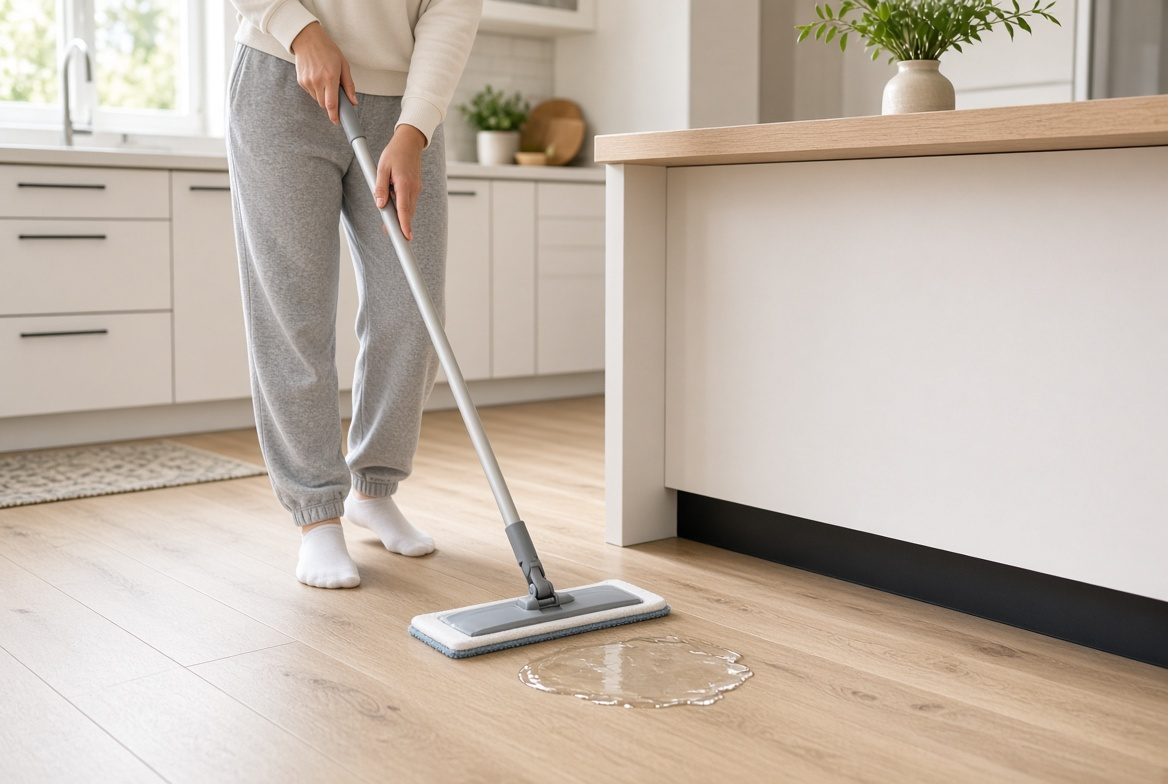
- Mop in sections along the plank direction. Wring the mop well so it’s damp, not dripping.
- Spot-dry standing moisture near seams, under appliances, and at thresholds.
- Let the floor air-dry before heavy foot traffic.
Most homes only need a full mop a few times a week in busy rooms, and a quick sweep more often. Kitchens and entries get dirty faster—spot-clean spills as they happen.
How to clean vinyl plank flooring without streaks
Streaks usually mean too much product, a dirty mop head, or water left to dry in patches.
Wring the mop until it barely drips. Work one area at a time, overlapping slightly. Rinse or swap the mop pad when it looks gray. Finish with a nearly dry pass if you see haze. For stubborn spots, a soft cloth and a little vinyl-safe cleaner beat scrubbing harder with a soaked mop.
Spills, kitchens, and waterproof LVP
Many modern vinyl planks are waterproof or highly water-resistant, which is why they work well in kitchens and similar spaces. Even then, wipe spills promptly. Standing liquid at edges and under rugs can still cause issues over time, depending on the product and install.
“Waterproof” does not mean “ignore puddles forever.” It means the plank itself handles moisture better than traditional wood look-alikes—and your cleaning routine should still favor damp over wet.
After installation — the first clean
Right after install you’ll see fine dust from cuts and fitting. Vacuum or sweep thoroughly before the first mop. Use a gentle damp pass only—no steam, no heavy soap. That first clean sets the tone: remove grit so it doesn’t grind into the new wear layer.
Common mistakes
- Steam mops: heat and moisture can stress seams and finishes on many LVP products. When in doubt, skip steam.
- Vinegar “hacks”: acidic mixes can dull some finishes over time. Stick to pH-neutral cleaners unless the manufacturer says otherwise.
- Flooding the floor: excess water at seams is a risk, especially on older or non-waterproof installs.
- Wax or polish meant for other floors: often leaves a sticky film vinyl doesn’t need.
- Ignoring manufacturer care sheets: your specific brand may list approved cleaners—follow those when you have them.
FAQ
Can I use vinegar on vinyl plank?
We don’t recommend it as a regular cleaner. Many LVP makers prefer pH-neutral products. Vinegar can leave residue or dull some finishes.
Is a steam mop safe?
Often no. Steam can force moisture and heat into seams. Use a damp microfiber mop instead unless your flooring brand clearly allows steam.
How often should I mop LVP?
Sweep or vacuum high-traffic rooms often. Mop when the floor looks dull or after spills—typically a few times a week in busy kitchens, less in quiet rooms.
Does waterproof LVP need a special cleaner?
Usually a pH-neutral vinyl/LVP cleaner is enough. “Waterproof is about moisture resistance, not a license for harsh chemicals.
Ready for a Quote?
If planks are lifting, peaking, gapping, or damaged—or you’re planning new vinyl, laminate, or carpet—request a quote from ProFit Flooring. Call 208-616-1536 and we’ll help you sort the next step without the pressure.
Leave a Reply